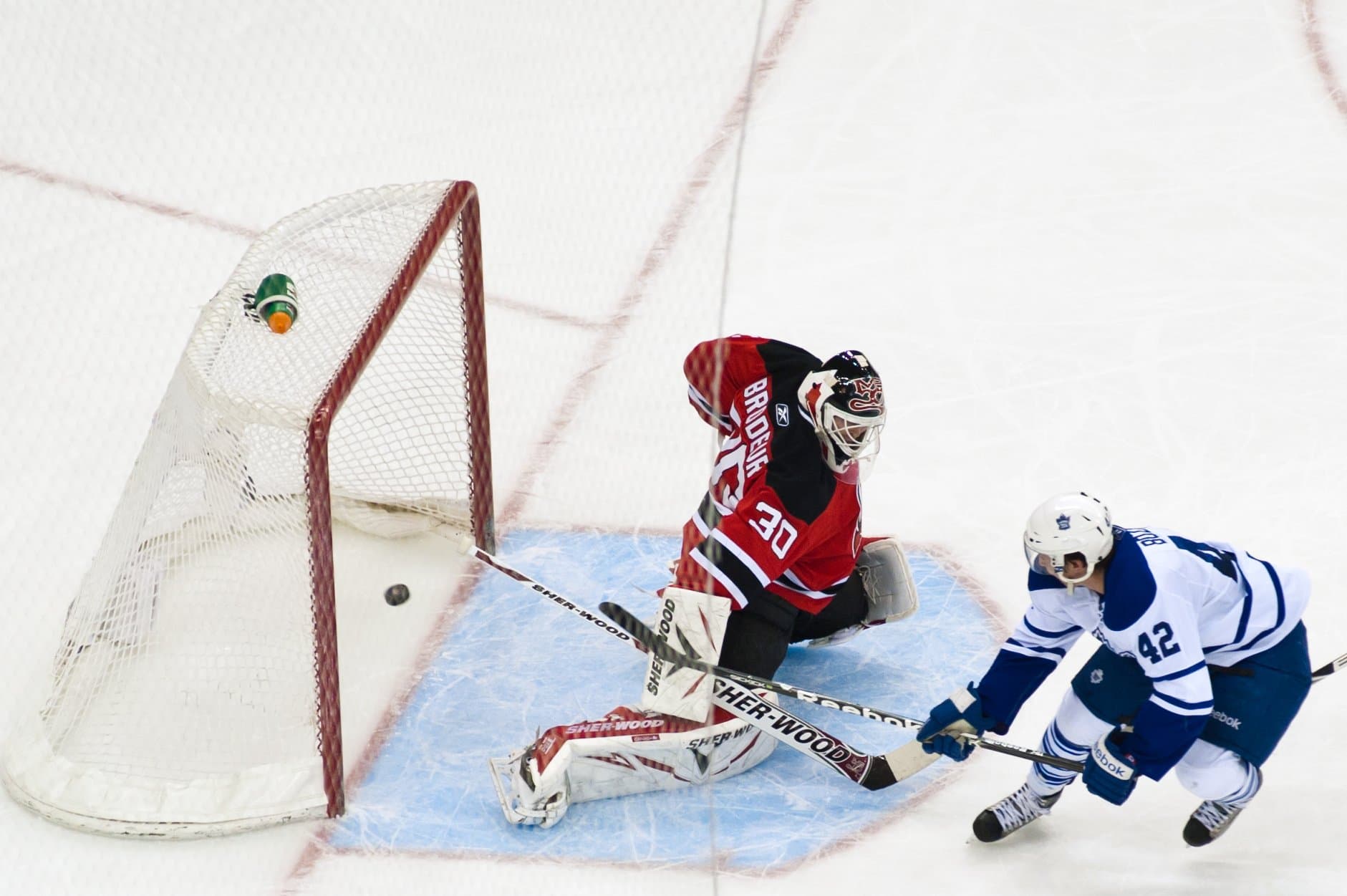
Photo: James DiBianco, Wikimedia Commons (BY-SA-2.0)
The Matthew Knies Trade Saga: Why Toronto Keeps Saying No
Table of Contents
How a Matthew Knies trade became the offseason's loudest rumour
The Matthew Knies trade talk did not start this month, and it did not start with John Chayka. It started at the March deadline, when then-general manager Brad Treliving fielded calls on a 23-year-old power forward one season into a six-year contract — and it has only grown louder since the Leafs locked up the No. 1 pick in the 2026 lottery. The pitch from the rest of the league is simple. Toronto needs to get younger and fix its blue line. Knies is the one asset on the roster that could fetch enough to do both at once. So far, the answer out of Toronto has been the same one it was in March: no.
That refusal is the story. Knies just finished the first year of a six-year, $46.5 million deal — an $7.75 million cap hit that runs through his late 20s — and instead of being the kind of contract a rebuilding-adjacent team dangles, it has become the contract every needy rival wants to pry loose. The Leafs keep declining. Understanding why is the key to reading the rest of Chayka's summer.
The six-piece offer Toronto turned down
The most concrete data point is the offer itself. At least one team assembled a large, multi-piece package for Knies — reported in some corners as a six-player framework — and Toronto declined it. The asking price the Leafs themselves set at the deadline reportedly ran in the range of two first-round picks plus a high-end prospect, or one first plus two high-end prospects. That is centre-of-a-rebuild money for a winger who is not yet a 30-goal scorer.
Treliving floated the name, listened, and stood pat. The takeaway from March was not that Toronto shopped Knies; it was that the bar to actually move him was set absurdly high, and nobody cleared it. When a player's listed price is two firsts and a blue-chip prospect, the front office is not selling. It is reminding the league what the player is worth.
'He broke the Toronto market': the Chris Johnston line
Then came the line that turned a deadline footnote into a full-blown saga. Insider Chris Johnston reported that there is at least one NHL team prepared to give up a larger return for Knies than it would for Auston Matthews — and that one rival executive felt Knies had 'broken the Toronto market' with how much teams were willing to surrender. Read that twice. A 23-year-old winger, one year into his deal, is drawing a bigger offer sheet of assets than the franchise's all-time leading goal scorer.
It sounds like hyperbole until you account for the inputs. Matthews is 28, carries a cap hit north of $13 million, and reportedly sits as the one untouchable name on Toronto's roster — which means no real market exists for him to set a price. Knies is younger, cheaper per dollar of production upside, signed long, and the kind of big, skilled, north-south forward the modern NHL almost never lets reach the market. Scarcity does the rest. The contract that looked like an overpay to some when it was signed now functions as a six-year discount on a rising asset.
The teams lining up
The list of suitors reads like a survey of the league's forward-needy contenders and rebuilders. Buffalo chased Knies hardest at the deadline, with the Sabres viewing a young power forward as the missing piece of a top six that has talent but lacks size and net-front weight. Montreal has been linked as a club with the prospect capital and cap room to make a swing, and the New York Rangers — already a Toronto trade partner in the Vincent Trocheck conversations — have surfaced as well.
Every one of those teams is offering some version of the same thing: futures and young roster pieces in exchange for a finished, cost-controlled forward. For a Leafs front office that the rest of the analytics-minded league assumed would happily cash that cheque, the refusal to do so has been the genuine surprise of the offseason. It is also a window into how Chayka actually values the player.
Why Chayka is reluctant to sell
The new general manager is reported to value Knies highly and to be reluctant to move him simply to make a splash — and that distinction matters. There is a version of this summer where a first-time GM, handed the No. 1 pick and a mandate to remake the roster, flips his most marketable young asset for a haul of picks and prospects, declares the rebuild underway, and takes the public-relations win. Chayka, by the reporting, is not interested in that trade.
The logic is sound. You do not solve a thin prospect pool by trading away the best young player already on your big-league roster; you solve it by drafting, developing, and keeping the cheap, controllable talent you have. Knies at $7.75 million through his late 20s is precisely the kind of contract a smart cap manager builds around, not the kind he liquidates. Moving him to 'get younger' would be self-defeating when he is already one of the three youngest core pieces on the team. Trading him for picks would be trading the certainty for the lottery ticket.
The fantasy and roster stakes
For anyone tracking this from a fantasy or pure roster-construction angle, the stakes are concrete. Knies is a fixture on Toronto's top six, a net-front presence on a power play that badly needs structure, and a player whose point totals have climbed every season. With Matthews returning from a knee injury and William Nylander carrying scoring loads, Knies is the third pillar of the offence — and the only one of the three young enough to still have his best statistical years in front of him.
Trade him, and the Leafs do not just lose a top-six forward; they lose the cheapest meaningful scoring on the roster and inherit a top-six hole on top of the centre and right-shot defence gaps already on the to-do list. The asset return might look gaudy on draft night. The roster the following October would be worse, younger only in the abstract, and short another scorer behind Nylander. That is the trade-off Chayka has clearly weighed and, for now, declined.
The pressure that won't go away
None of this means the saga is over. Winning the lottery created its own gravity. With the No. 1 pick in hand and a roster that just missed the playoffs for the first time in nine years, the external pressure to fix the blue line and accelerate a retool is real, and Knies is the obvious currency. Johnston himself stopped short of saying Toronto will shop him again, noting only that it has happened before and cannot be ruled out. That is the honest read. The price stays high, the suitors stay interested, and the front office keeps the option in its back pocket.
The structural needs are not going anywhere either. As laid out in our breakdown of the positions this team actually has to fix, the right side of the defence beyond Brandon Carlo and the scoring depth behind Nylander are the real gaps. Knies is the one trade chip large enough to address either in a single move — which is exactly why the calls keep coming, and exactly why trading him would create as many problems as it solves.
What's next
Watch the draft. The 2026 NHL Draft on June 26-27 is the natural pressure point: it is when teams with picks to move are most motivated, when the No. 1 selection focuses every conversation, and when a Knies offer, if one is ever going to clear Toronto's bar, would most plausibly land. Expect the Sabres, Canadiens and Rangers to circle back, expect the price to stay at two-firsts-plus territory, and expect Chayka to keep saying no unless someone wildly overpays. The contract details and cap context are tracked on the live contracts page. The smart bet is that Matthew Knies opens next season in blue and white — not because the offers stopped, but because the right one never came.
Frequently Asked Questions
Are the Maple Leafs trading Matthew Knies?
As of late May 2026, no. Toronto declined a large multi-piece offer for Knies and has resisted trading him despite winning the No. 1 pick. New GM John Chayka is reported to value Knies highly and is reluctant to move him just to make a splash.
What is Matthew Knies' contract?
Knies signed a six-year, $46.5 million extension that took effect for the 2025-26 season, carrying a $7.75 million annual cap hit. The deal runs through his late 20s, making him one of the most cost-controlled core forwards on the roster.
What did Chris Johnston say about Matthew Knies' trade value?
Johnston reported that at least one NHL team would give up a larger trade package for Knies than for Auston Matthews, and that a rival executive felt Knies had 'broken the Toronto market' with how much teams were willing to surrender to acquire him.
Which teams want to trade for Matthew Knies?
The Buffalo Sabres pursued Knies most aggressively at the March deadline. The Montreal Canadiens and New York Rangers have also been linked as clubs with the prospect capital and cap room to make a competitive offer.
What would it cost to trade for Matthew Knies?
At the deadline, Toronto's reported asking price ran in the range of two first-round picks plus a high-end prospect, or one first plus two high-end prospects. That is a steep, rebuild-altering return for a 23-year-old winger signed long-term.
Why won't the Leafs trade Matthew Knies after winning the No. 1 pick?
Because trading away your best young, cost-controlled forward does not actually make a team younger or better. Chayka is reported to prefer building around Knies rather than selling him for futures, and moving him would open a top-six hole on top of the existing centre and defence needs.
When could a Matthew Knies trade happen?
If it happens at all, the 2026 NHL Draft on June 26-27 is the most likely window, when teams holding picks are most motivated to move them. Most signs point to Knies opening next season with Toronto unless a rival dramatically overpays.