Photo: Andre Carrotflower, Wikimedia Commons (BY-SA-4.0)
Maple Leafs 2026 Draft Picks: The Full Toronto Board Beyond McKenna at No. 1
Table of Contents
Maple Leafs 2026 draft picks start at No. 1 and then thin out fast
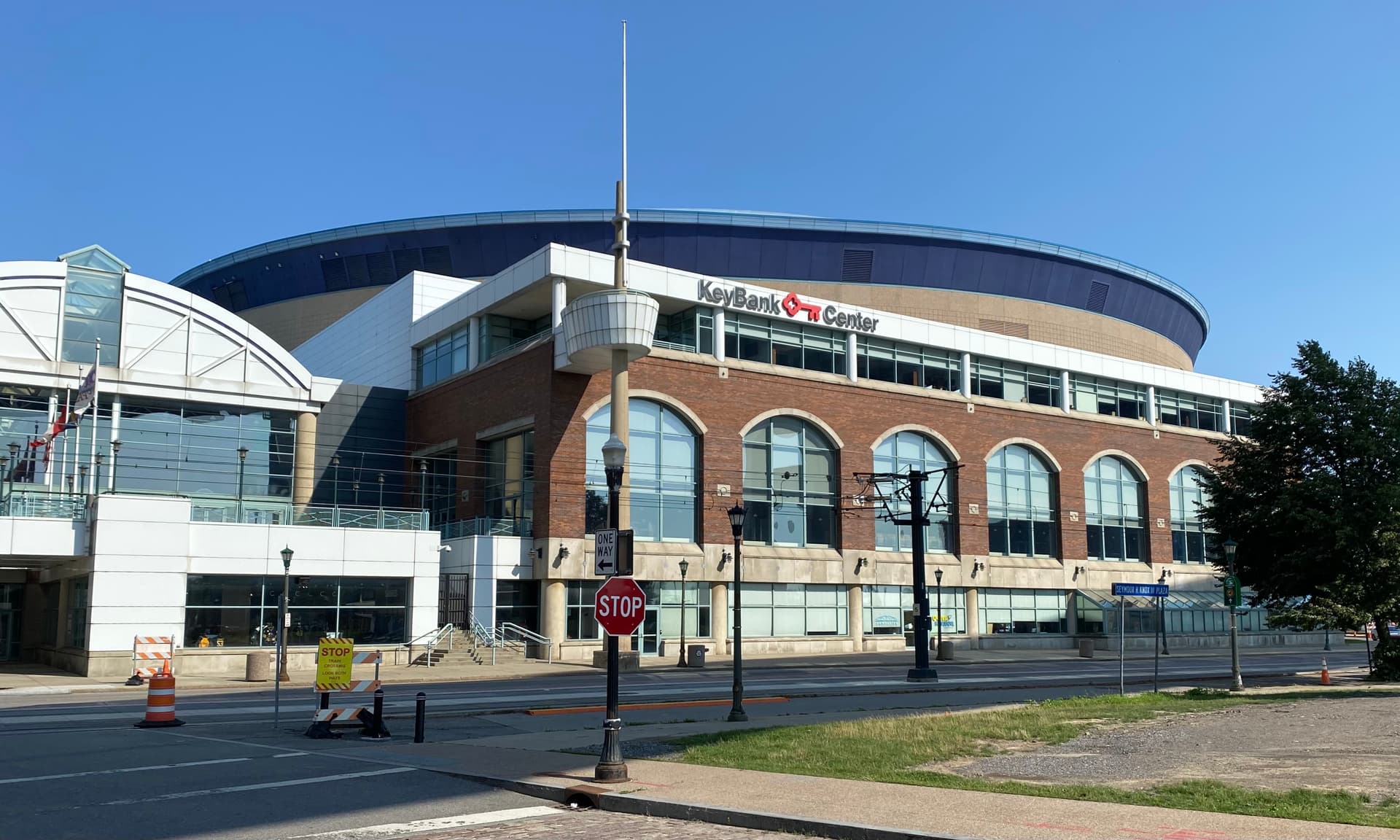
The headline on the Maple Leafs 2026 draft picks is the one everyone already knows: Toronto owns the first overall selection for the first time since 1985, and barring a stunner it will spend that pick on Penn State winger Gavin McKenna when the draft opens Friday, June 26 at KeyBank Center in Buffalo. What gets far less attention is everything that comes after. Once you get past No. 1, John Chayka's pick cupboard is light, top-heavy, and stitched together almost entirely from deadline and offseason trades.
As the published order stands, Toronto holds seven selections: the No. 1 overall pick, a second-rounder at 60th, two third-round picks at 69th and 85th, a fourth-rounder at 114th, a fifth-round pick at 158th, and a sixth-rounder at 169th. There is no Toronto name in the seventh round. That is a strange-looking sheet for a team that just bottomed out — and it is the direct result of years of deadline buying followed by a March fire sale under interim management.
Round 1: the McKenna pick, and nothing else
Toronto's only first-round pick is the big one. The Leafs won the 2026 draft lottery at 8.5 percent odds, jumping the order to land at No. 1, and Chayka has spent the spring making it clear the plan is to keep and use it. "The probability is we take the pick," he told reporters around the combine, which is about as close to a confirmation as a general manager gives three days out.
McKenna is the consensus choice. The 18-year-old put up 51 points in 35 games as a freshman at Penn State, including a 33-point run over his final 19 games after returning from Canada's world junior team. For the full breakdown of what Toronto is getting, see our Gavin McKenna scouting report. The short version: this is a franchise winger, the kind of prospect a team in Toronto's position does not trade and does not overthink.
Round 2: the Laughton pick at No. 60
Toronto does not own its own second-round pick. The selection it does hold, 60th overall, came from the Los Angeles Kings in the Scott Laughton trade at the March deadline. That deal sent Laughton west for a 2026 third-round pick that carried a condition — it upgraded to a second-rounder if the Kings made the playoffs. Los Angeles did, so the pick converted, and Toronto's lone Day 2 selection inside the top 60 exists because a deadline rental panned out for the buyer.
At 60th, this is a real prospect-acquisition asset. It is also the most movable currency Chayka has if he wants to package picks to climb the board or attach to a salary in a trade. In a draft this deep through the middle rounds, a pick in the high 50s or low 60s has tangible value around the room in Buffalo.
Round 3: a double-dip at 69 and 85
The third round is where Toronto actually has volume. The Leafs keep their own pick at 69th and added a second third-rounder, 85th overall, in the Joseph Woll trade with Philadelphia. That deal — Woll and Simon Benoit to the Flyers for Samuel Ersson, Emil Andrae, and the third-round pick — reshaped Toronto's crease and netback some draft capital in the process. We broke down the hockey side of it in our look at the Woll trade to the Flyers.
Two third-round picks give Toronto flexibility most rebuilding teams would envy in the wrong way — they are the picks you use to take swings on size, skating, or a late-blooming junior scorer. They are also the picks scouts fight hardest over internally, because the third round is where draft-and-develop programs are actually built. Expect Mark Leach's amateur staff, working under the new front-office structure, to lean into upside here rather than safe floor.
Round 4 and later: the McMann pick and the leftovers
Toronto's fourth-round selection, 114th overall, arrived in the Bobby McMann trade with Seattle, a deadline deal that also returned a 2027 second-round pick. McMann had 19 goals and 32 points in 60 games before the move, and flipping a useful, cost-controlled forward for futures was the kind of sell-side decision that stocked Toronto's later rounds.
After that, it is slim: a fifth-round pick at 158th and a sixth-rounder at 169th, the latter acquired from San Jose in the 2024 Timothy Lilljegren trade. There is no seventh-round pick on the board. For a club coming off a lottery win, the back half of Toronto's draft is unusually quiet — a reminder that the Leafs traded away a lot of late-round darts during their all-in window.
Why the board looks like this
The shape of the Maple Leafs 2026 draft picks tells the story of the last 18 months in one glance. This was a team that spent futures to win now, missed the playoffs anyway, fired its coach and parted with its GM, and then sold at the deadline once the season was lost. The picks Toronto now holds at 60, 85, 114, and 169 are essentially the salvage value of that pivot — Laughton, Woll, McMann, and Lilljegren all turned into draft capital on the way out.
It also explains why Chayka has leaned so hard on the trade and free-agent markets to rebuild the supporting cast rather than waiting on the draft. With the cap rising to $104 million and Toronto sitting on real space, the front office has already added Darren Raddysh and reshaped the goaltending. You can track the cap math on our contracts page and the broader picture in our breakdown of Toronto's cap space after the Raddysh signing.
What Chayka should do with the Day 2 capital
The honest read: this is a draft to add bodies to a thin pipeline, not to chase a specific need. Toronto's prospect system has been gutted by years of trades, and the Marlies' Calder Cup run aside, the organization needs raw volume of young talent. That argues for keeping the picks and drafting the best players available, especially the two third-rounders.
The counter-argument is that the 60th pick, in particular, is exactly the sweetener a contender attaches to a Morgan Rielly deal or uses to move up. With Rielly's situation heating up — he has reportedly given the front office a list of teams he would consider — the draft floor in Buffalo doubles as a trade bazaar. We laid out the destinations in our piece on the Rielly trade list.
What's next: three days to Buffalo
Round 1 goes Friday, June 26 at 7 p.m. ET; Rounds 2 through 7 follow Saturday, June 27 at 11 a.m. ET. Toronto picks first, then waits a long time before its next turn at 60th. Between now and then, watch for Chayka to work the phones — the combination of one premium pick, a cluster of mid-round capital, and a movable veteran in Rielly is the recipe for a busy weekend. For the full slate of dates and how the Leafs got here, see our 2026 NHL Draft guide for the Maple Leafs, and keep an eye on the draft hub as the picks come in.
Frequently Asked Questions
How many draft picks do the Maple Leafs have in 2026?
As the published order stands, Toronto holds seven selections: No. 1 overall, a second-rounder at 60th, two third-round picks (69th and 85th), a fourth-rounder at 114th, a fifth-round pick at 158th, and a sixth-rounder at 169th. The Leafs have no seventh-round pick.
When is the 2026 NHL Draft?
Round 1 is Friday, June 26 at 7 p.m. ET, with Rounds 2 through 7 on Saturday, June 27 at 11 a.m. ET. The draft is at KeyBank Center in Buffalo, New York.
Where did the Maple Leafs get their 60th overall pick?
It came from the Los Angeles Kings in the Scott Laughton deadline trade. Toronto received a 2026 third-round pick that converted to a second-rounder because the Kings made the playoffs.
Do the Maple Leafs have a first-round pick besides No. 1 overall?
No. Toronto's only first-round selection in 2026 is the No. 1 overall pick it won in the draft lottery. The Leafs do not own a second first-round pick this year.
Why do the Maple Leafs have so few draft picks?
Years of all-in deadline buying spent future picks, and a March 2026 sell-off only partially restocked the board. The picks at 60, 85, 114, and 169 came back in the Laughton, Woll, McMann, and Lilljegren trades.
Will the Maple Leafs trade their draft picks in 2026?
It's possible. The 60th-overall pick is Toronto's most movable mid-round asset and could be attached to a Morgan Rielly trade or used to move up the board during the draft in Buffalo.