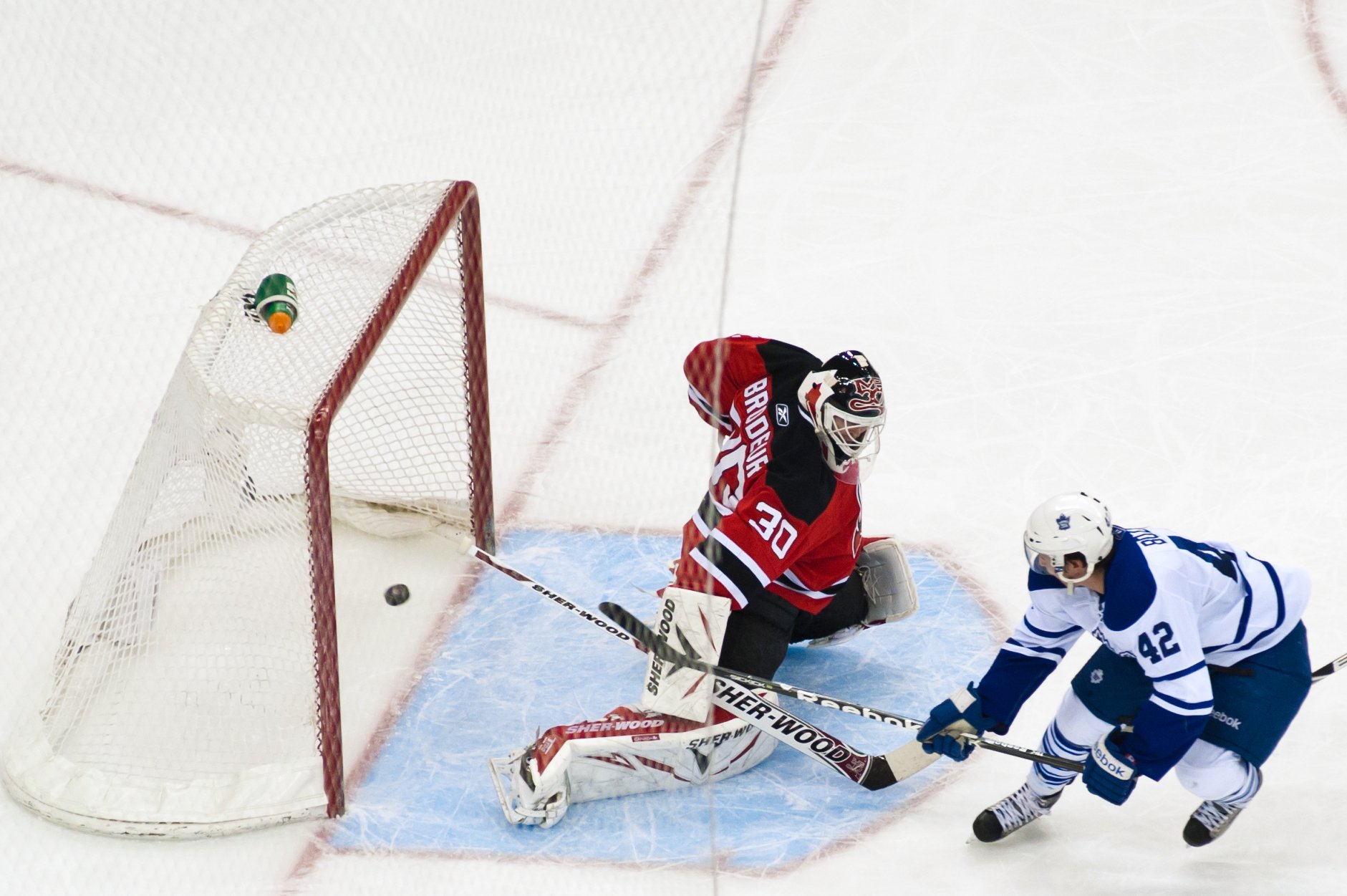
Photo: Adam Bishop, Wikimedia Commons (BY-SA-4.0)
Chayka Says a Matthew Knies Trade Is 'Not Probable' — and He's Right
Table of Contents
Chayka shuts the door on a Matthew Knies trade
A Matthew Knies trade is 'not probable,' Maple Leafs general manager John Chayka told reporters Friday, the clearest signal yet that Toronto's most coveted young forward is staying put. Speaking after acquiring defenceman Darren Raddysh from Tampa Bay, Chayka addressed the swirl of speculation around his 23-year-old winger directly: 'The idea that we are going to improve the roster by moving a top young player, I mean, anything is possible, but I guess it is not probable.'
That is about as firm as a GM gets in June without using the word 'untouchable.' And given how Knies played in 2025-26, it is the correct read. Toronto does not have a surplus of cost-controlled, productive forwards entering their prime. It has exactly one of real significance, and Chayka just told the league he is not interested in giving it away.
Why Knies became a trade-rumour magnet
Knies spent the spring at the centre of rival executives' wish lists for obvious reasons. He is young, he is big, he scores, and he is the kind of player a rebuilding or retooling team would happily overpay to acquire. When a franchise misses the playoffs, fires its coach, changes general managers and starts publicly reshaping its roster, every good young asset gets floated. That is how the rumour mill works, and Knies was always going to be the headline name.
It did not help that Toronto has real needs Knies could theoretically be used to address — most notably down the middle. We laid out the centre problem in detail in our look at the McTavish math, and the temptation to package a premium winger for a young centre is exactly the kind of logic that keeps a name like Knies in the rumour churn. Chayka's comments are a direct rebuttal to that logic.
The career year that changed the calculus
The strongest argument against a Matthew Knies trade is the stat line. Knies posted 66 points in 79 games in 2025-26, a career year, and he did it while playing through an injury down the stretch. That is top-six production from a 23-year-old on a manageable contract, and it is precisely the asset profile that contending teams spend years trying to develop or fortunes trying to acquire.
Trading him would mean selling low on a player who is trending up, and it would mean replacing his production from a market — both free agency and the trade board — that is thin on exactly this kind of player. The 2026 UFA class is one of the weakest in years, a point we made when Toronto chased the top of it. Moving Knies to fix one hole while opening another is not how you climb back into the playoff race.
What 'not probable' actually means
It is worth parsing the language, because Chayka chose it carefully. He did not say never. He said he will 'evaluate everything,' a standard GM posture that keeps the phone lines open. But he framed the specific idea of dealing a top young player as a 'tough bar to hurdle.' In practice, that means a team would have to blow Toronto away — likely with a young, controllable centre and more — before the conversation got serious.
That is a healthy distinction. A good GM never publicly declares anyone untradeable, because doing so kills leverage. But there is a difference between leaving a theoretical door cracked and actively shopping a player, and Chayka's comments put Knies firmly in the former category.
How this fits the rest of Chayka's offseason
The Knies comments make more sense when you stack them against everything else Chayka has done. In roughly seven weeks on the job, he has hired Jim Hiller as head coach, traded Joseph Woll, locked up Raddysh on an eight-year deal, and continued to explore the trade market for veteran defenceman Morgan Rielly. The throughline is clear: reshape the blue line, manage the goaltending, and protect the young core up front.
Knies is the centrepiece of that young core alongside the established stars. Chayka has been aggressive about moving older or more replaceable pieces, but he has been protective of the players the next competitive Leafs team will be built around. Keeping Knies while shopping Rielly — which we covered in our Rielly trade breakdown — is a coherent plan, not a contradiction.
The contract question still looms
Keeping Knies out of trade talks is the easy part. The harder part is what comes next on his contract. A player coming off a 66-point season is going to want to be paid like one, and Toronto already carries a heavy commitment to its top end. Fitting a raise for Knies into the cap structure is a real piece of business, and it is one reason the front office is being so disciplined elsewhere. You can see the full commitment picture on our contracts page.
That tension is the actual story here. The question was never really whether the Leafs should trade Knies — they should not, and now will not. The question is how they pay him while also adding a centre and rebuilding the defence under a cap that, even with the increase to $104 million, is tighter than it looks once the stars are accounted for.
The comparables work in Toronto's favour
Look around the league at what young, productive forwards cost in trade, and the case for keeping Knies gets stronger. Teams routinely surrender a haul of picks, prospects and roster players to pry loose a 23-year-old who can score 30 goals or post 60-plus points. The Maple Leafs would not be buying low if they moved him; they would be the seller in exactly the kind of deal other clubs dream about landing. Selling a premium asset is only smart when you are getting a premium return that addresses a bigger need, and the centre market simply is not deep enough this summer to guarantee that.
There is also the matter of the player's age curve. Knies is entering the years when power forwards typically take their biggest leap. A winger who already produced 66 points while dealing with an injury has obvious room to grow as his role and ice time expand under a new coaching staff. Trading him now would mean cashing out before the most valuable part of his career, the opposite of how rebuilding teams are supposed to operate.
What's next
Expect the Knies rumours to quiet down, at least until something dramatic forces the issue. Chayka has said what he needed to say, and the player's production backs him up. The focus now shifts to the draft on June 26, where Toronto picks first overall, and to July 1, where the centre search continues in earnest.
For Leafs fans who spent the spring bracing for another core piece to be shipped out, this is a small but meaningful reassurance. Chayka is willing to be bold — the Woll trade and the Raddysh contract prove that — but he is drawing a line at his best young forward. On this one, the boldness is in standing pat. Follow the rest of the roster reshape on our standings and team hub.
Frequently Asked Questions
Did John Chayka say the Maple Leafs would trade Matthew Knies?
No. Chayka said a Matthew Knies trade is 'not probable,' adding that improving the roster by moving a top young player is 'a tough bar to hurdle.' He stopped short of calling Knies untouchable but signalled he is not shopping him.
How many points did Matthew Knies score in 2025-26?
Knies posted 66 points in 79 games during the 2025-26 season, a career high. He played through an injury down the stretch, which makes the production even more notable for a 23-year-old.
Why were there Matthew Knies trade rumours?
After missing the playoffs and changing GMs, the Maple Leafs began reshaping their roster, and every valuable young asset gets floated in trade talk. Knies' age, size and scoring made him the most prominent name, especially as Toronto looks for a centre.
Is Matthew Knies a free agent in 2026?
Knies remains under team control, but a 66-point season strengthens his next contract case. Fitting a raise into Toronto's cap structure is one of the front office's key offseason challenges, which is part of why the team has been disciplined elsewhere.
What else has John Chayka done this offseason?
In roughly seven weeks, Chayka hired Jim Hiller as head coach, traded Joseph Woll to the Flyers, signed Darren Raddysh to an eight-year, $68 million deal in a sign-and-trade, and continued exploring a Morgan Rielly trade.
Could the Maple Leafs still trade Knies later?
It is unlikely. Chayka said he will 'evaluate everything,' which keeps the door technically open, but a rival team would essentially have to overwhelm Toronto with a young, controllable centre and more before serious talks would begin.