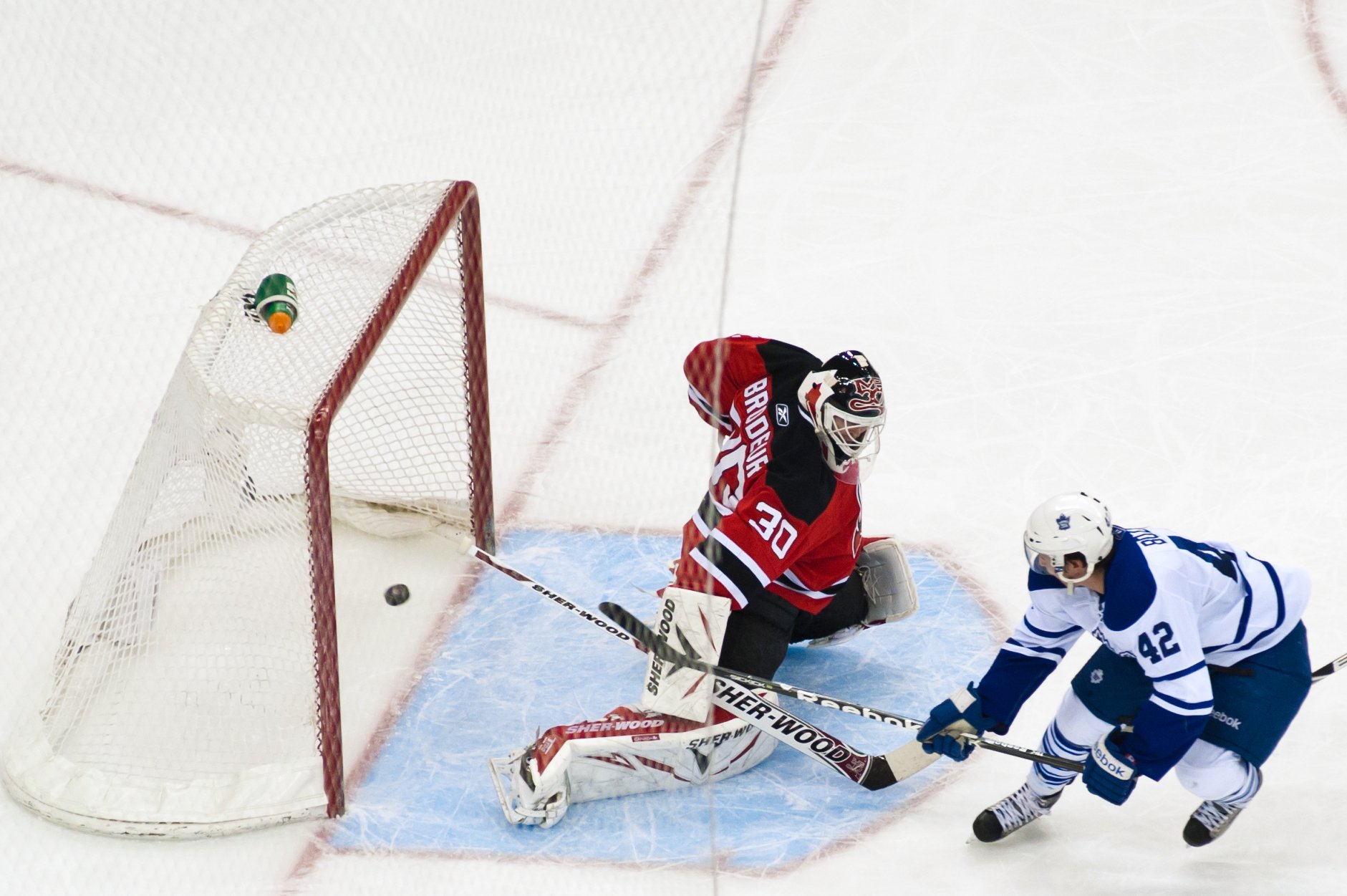
Photo: mrose.typespace, Flickr (BY-SA-2.0)
Sam Ersson and Emil Andrae: What the Maple Leafs Actually Got for Woll
Table of Contents
Meet the Players Coming Back in the Woll Trade
When the dust settled on Joseph Woll's exit, the names coming the other way were Sam Ersson and Emil Andrae. The Maple Leafs acquired both from Philadelphia on June 16, along with a third-round pick, and while neither arrives with the profile of a marquee return, both fit specific holes John Chayka has been trying to fill. This is a closer look at what Toronto actually bought.
Trades like this get graded on the headline player. But the value here is in the details — a controllable goaltender with starter experience and a mobile defenceman who plays the exact style Chayka keeps talking about. Sam Ersson and Emil Andrae are not stopgaps. They are bets.
Sam Ersson: A Bigger, Calmer Presence in Net
Ersson is a 26-year-old from Falun, Sweden, originally a fifth-round pick by the Flyers in 2018. At 6-foot-3 and roughly 195 pounds, he is a bigger, more positionally conventional goaltender than Woll, who relied on athleticism and reflexes. Ersson plays a quieter, more structured game — square to shooters, economical with his movement, less prone to the scrambles that sometimes cost Woll.
The track record is mixed but legitimate. Across 142 career NHL games, Ersson carries a .884 save percentage, and he has already handled stretches as Philadelphia's number one. His 2025-26 numbers were underwhelming — a save percentage that slipped under .890 and a goals-against average north of 3.00 — but context matters. He was tending net for a team that surrendered chances in bunches.
Why Ersson Could Look Better in Toronto
Goaltending statistics are downstream of team defence, and that is the optimistic case for Ersson. Behind a deeper, more structured Toronto group, a goaltender who posted middling numbers on a rebuilding Flyers team has room to climb. He does not need to be a star. He needs to be a reliable 25-to-30-game backup who can carry the load if Anthony Stolarz's injury history resurfaces.
That is the real job description. Stolarz missed a chunk of last season with a nerve injury, and Toronto's decision to deal Woll only works if the man behind Stolarz can be trusted. Ersson has more NHL starts than most backups and is still in his prime years. As a pending restricted free agent, he is also cost-controlled, which matters with the cap math we laid out in our free agency breakdown.
Emil Andrae: The Puck-Mover Toronto Wanted
Andrae is the more intriguing long-term piece. A 24-year-old Swede taken 54th overall in 2020, he is undersized at 5-foot-9 but thickly built and, by reputation, one of the better skating defencemen in his draft class. He registered 13 points in 61 games for Philadelphia last season in a sheltered role, and scouts consistently praise his vision, his ability to walk the offensive blue line, and his clean breakouts under pressure.
That profile is no accident. Chayka has been explicit about wanting mobility and puck movement on the back end, and we detailed how central that is to his plan in the Leafs blueline rebuild. Andrae is a textbook version of the player type Toronto has been chasing — a defenceman who exits the zone with the puck on his stick rather than chipping it off the glass.
The Size Question Nobody Can Ignore
The obvious counterargument is height. At 5-foot-9, Andrae has spent his career having to prove he can defend NHL forwards in front of the net and along the wall. Toronto just traded the 6-foot-4 Simon Benoit, so the blueline gets smaller and more skilled in one move. In a conference that still features heavy forecheck teams, that is a genuine trade-off.
But the league has repeatedly shown that smart, mobile defencemen can survive a lack of height if their gaps and stick are good. Andrae's edges let him close space quickly, and his outlet passing reduces the time the puck spends in his own end in the first place. He is not a finished product, and he may start 2026-27 in a third-pair or rotational role, but the upside is a top-four puck-mover on a cheap deal.
How They Fit Toronto's Bigger Picture
Step back and the logic of the return comes into focus. Toronto turned a surplus goaltender into a goaltender it needed (a backup), a defenceman it wanted (a puck-mover) and a draft pick that grows its 2026 haul to roughly eight selections. For a front office rebuilding the roster's identity rather than chasing one big name, that is efficient use of an asset.
Neither Ersson nor Andrae will headline the offseason. The No. 1 overall pick and the looming head-coaching decision will do that. But role players win and lose seasons at the margins, and Chayka clearly believes both of these players outperform their reputations in the right environment. You can see where they slot on Toronto's depth chart on our players page.
The Benoit Trade-Off, Spelled Out
It is worth being clear-eyed about what Toronto gave up on the back end to get Andrae. Simon Benoit was a 6-foot-4 left-shot defender who played a hard, physical, defend-first game and ate tough minutes without complaint. Andrae is nearly a foot shorter and plays the game from the other end of the spectrum. This is not an upgrade in every category — it is a deliberate swap of one skill set for another.
If you valued Benoit's net-front presence and willingness to defend, you will not love trading him for a smaller, more offensive player. The counter is that Toronto already had bigger bodies on the back end and almost none of Andrae's transition ability. In a league that increasingly punishes teams that cannot exit their own zone cleanly, betting on movement over mass is a defensible philosophy — even if it leaves the Leafs a touch lighter in front of their own goaltender.
What the Contracts Might Look Like
Because both players are restricted free agents, the next step is signing them, and the likely outcome is a pair of cost-friendly deals. For Ersson, a backup-goaltender contract in the low-seven-figures range would be typical for a netminder with his starts and age. For Andrae, a short bridge deal makes the most sense — prove the skill translates to a bigger role, then talk term. Both fit neatly under a rising cap and preserve the flexibility Chayka prizes.
That cost certainty is part of the appeal. Toronto did not just acquire two useful players; it acquired two players whose price tags it can largely control while it sorts out bigger commitments elsewhere on the roster. In a cap era defined by tight margins, controllable contracts are currency.
What's Next for the New Leafs
The immediate task is contracts. Both players are restricted free agents, so Chayka needs to sign them before they count for anything — likely bridge deals that keep cap hits modest. Expect both to be done well before training camp. From there, it is about fit: can Ersson steady the crease behind Stolarz, and can Andrae earn the minutes his skill suggests he deserves?
If the answers are yes, this quiet return becomes one of the underrated moves of Toronto's summer. If they are no, it was still a low-risk way to clear a goaltending logjam. Either way, the players Toronto got for Woll deserve a closer look than the box score gives them — and the next few months will tell us which bet Chayka actually won.
Frequently Asked Questions
Who is Sam Ersson?
Sam Ersson is a 26-year-old goaltender from Falun, Sweden, drafted by the Flyers in the fifth round in 2018. He stands 6-foot-3, has played 142 career NHL games with a .884 save percentage, and was acquired by the Maple Leafs on June 16, 2026 in the Joseph Woll trade to serve as Anthony Stolarz's backup.
Who is Emil Andrae?
Emil Andrae is a 24-year-old Swedish defenceman taken 54th overall by Philadelphia in 2020. He is a 5-foot-9 puck-mover known for his skating and vision, and he posted 13 points in 61 games for the Flyers in 2025-26 before being traded to Toronto in the Woll deal.
Are Sam Ersson and Emil Andrae signed for next season?
Both are pending restricted free agents, so the Maple Leafs hold their rights but still need to sign them to new contracts before the 2026-27 season. Expect modest bridge deals to be completed before training camp.
Will Emil Andrae make the Maple Leafs roster?
Andrae has 61 games of NHL experience and fits Chayka's stated desire for mobile, puck-moving defencemen, so he has a real path to the roster. He may begin the season in a third-pair or rotational role given his size, with room to earn more minutes.
Is Sam Ersson better than Joseph Woll?
It's a different bet rather than a clear upgrade. Ersson is a bigger, more positional goaltender with steadier health, while Woll has shown higher peaks but more injury concerns. Toronto is wagering that Ersson is a more reliable insurance option behind Anthony Stolarz.
How tall is Emil Andrae?
Andrae is listed at 5-foot-9, making him one of the smaller defencemen in the NHL. He compensates with strong skating, good edges and reliable puck movement, though his size is the main question scouts raise about his game.